Canon DSLRs: selling to a first-time buyer
A course for camera shop staff. The hard part is never the specs. It is explaining sensor size to someone who just wants good photos of their kid, and then not selling them a body they will never grow into.
Design decisions
The problem
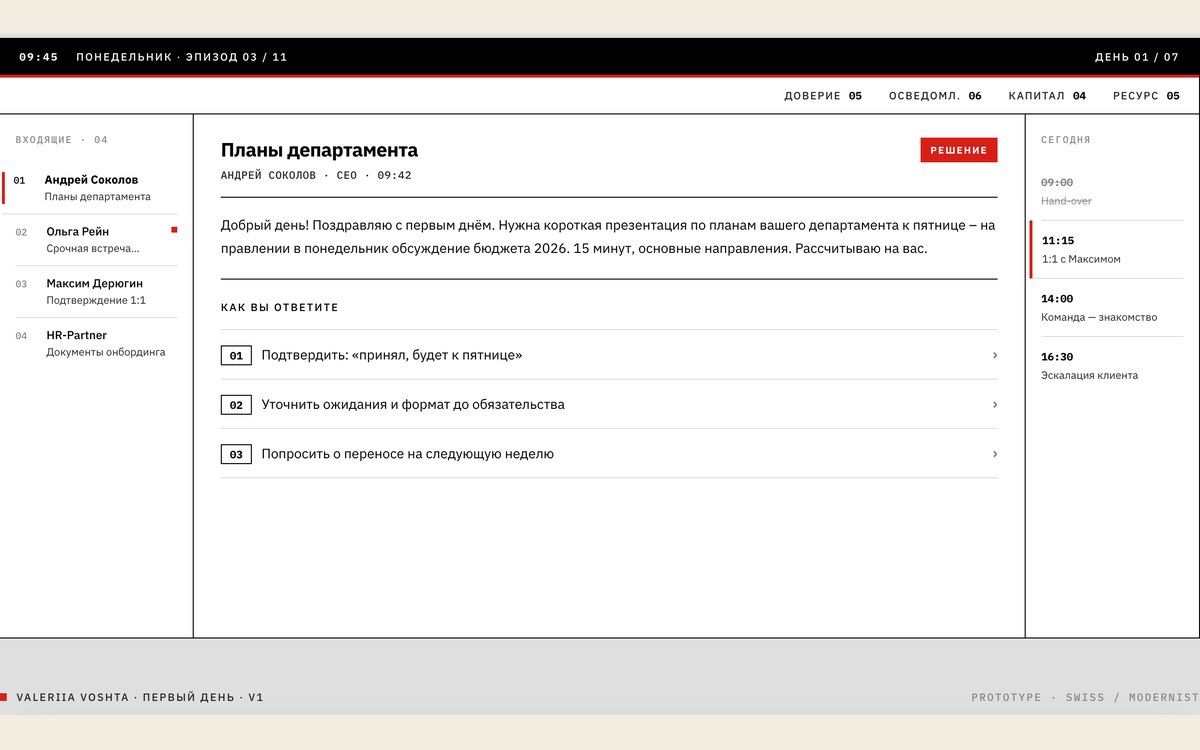
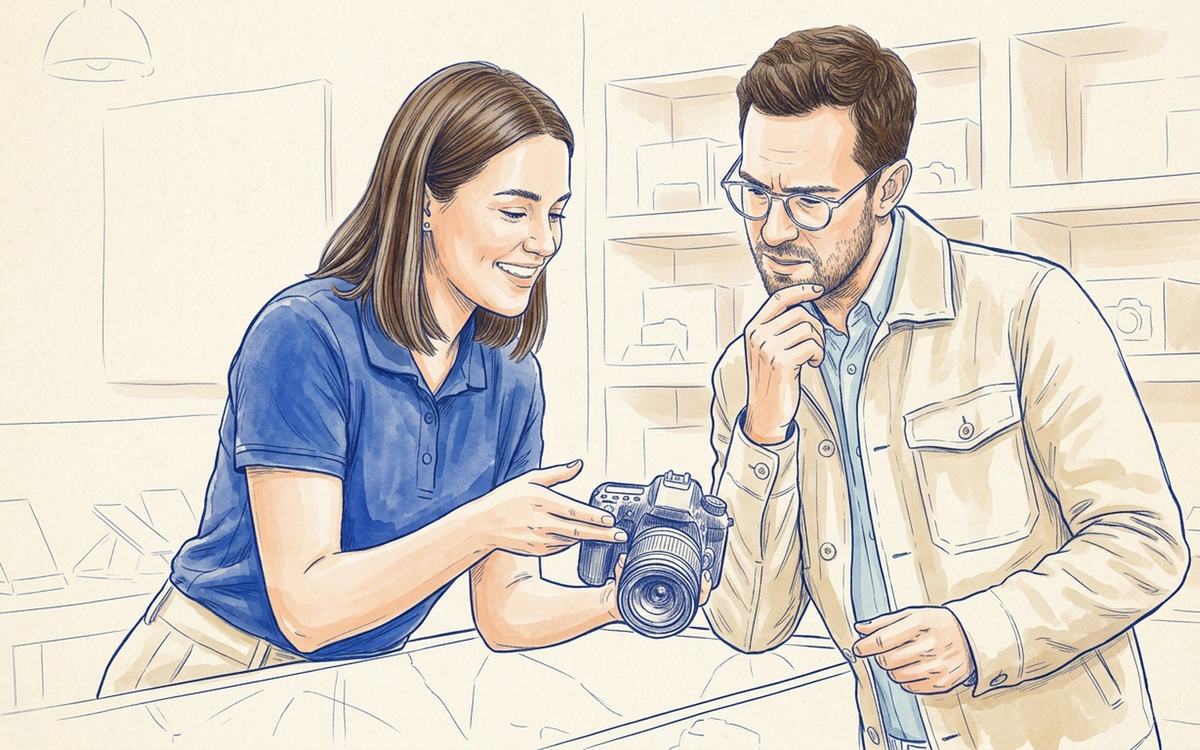
A camera-shop assistant knows the specs better than the customer, and that is exactly why the conversation fails. He answers a question about the sensor with numbers, while the person came in wanting good photos of her child. The course had to retrain something other than product knowledge – the translation from what the spec sheet says to what the camera is bought for.
The objective: the assistant matches a camera and a lens to what the customer asks for, and explains the choice in one sentence without retreating into specifications.
Why it works this way
The buyer appears before the gear
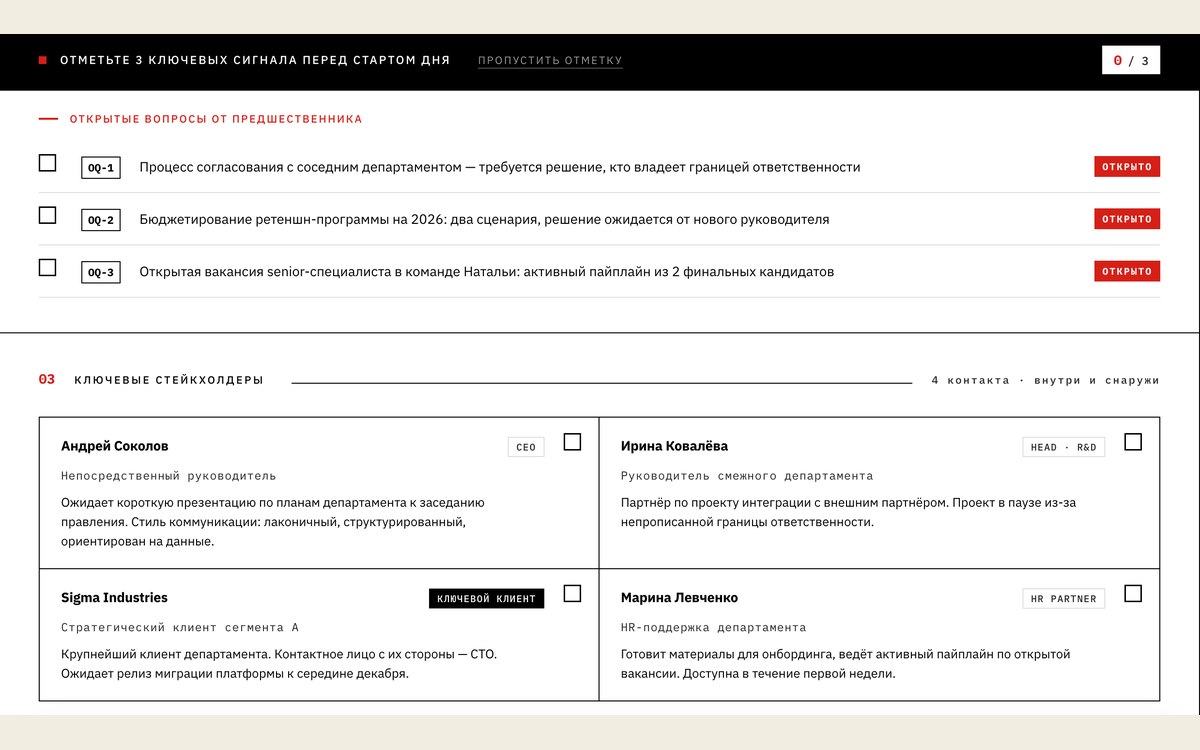
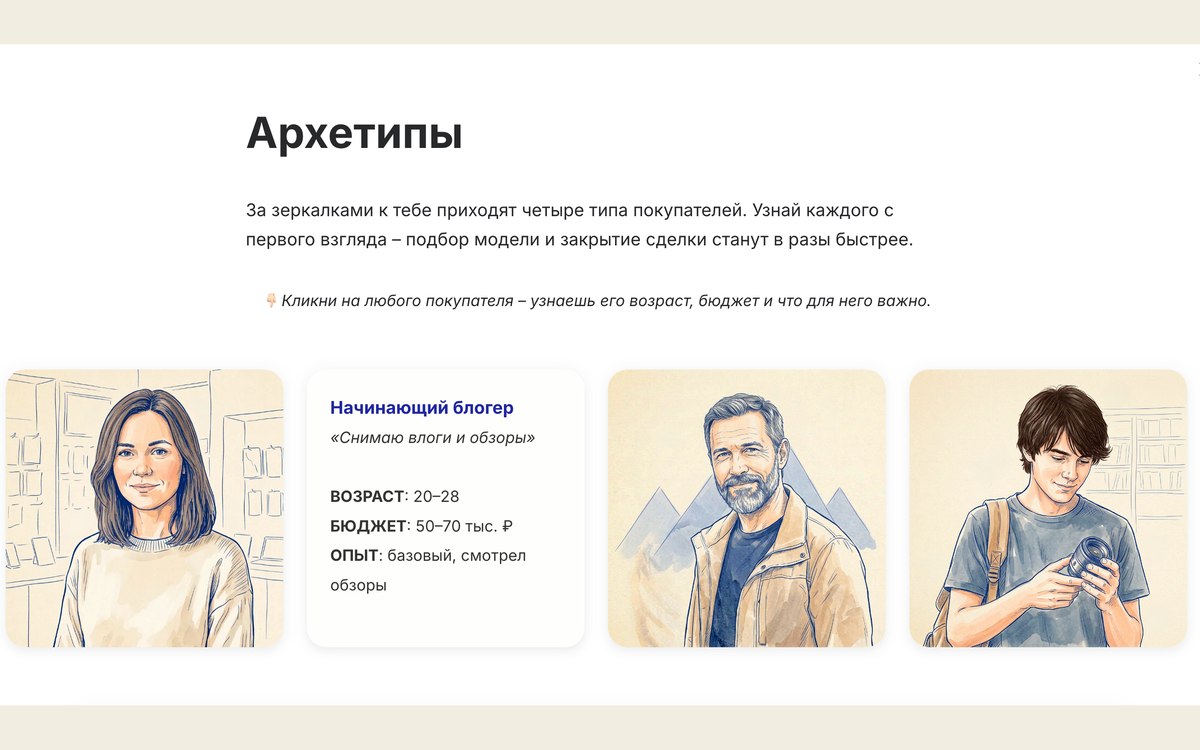
The first content screen holds four buyer archetypes with age, budget and experience. Before the assistant sees a single model, he sees who he is selling to.
One variable at a time
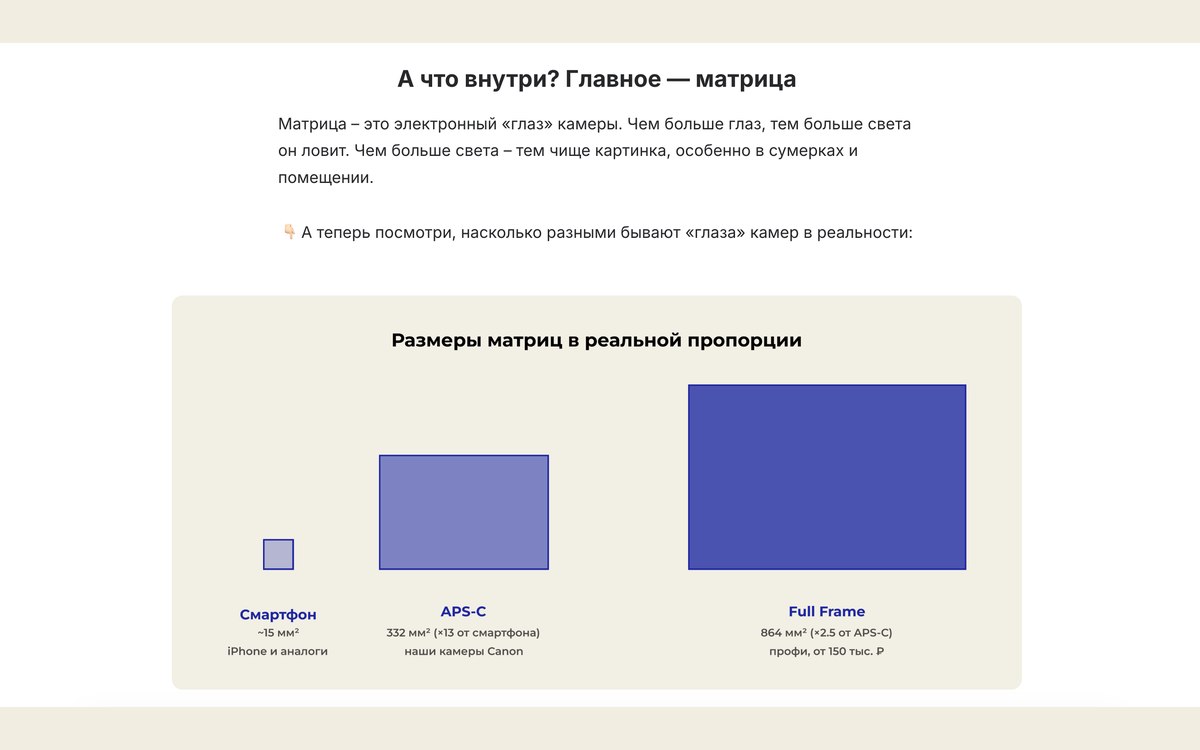
Sensor sizes are drawn to scale: phone, APS-C and full frame side by side. Not a table of millimetres, but a picture the assistant can reproduce for a customer with his hands.
An anchor line for every model
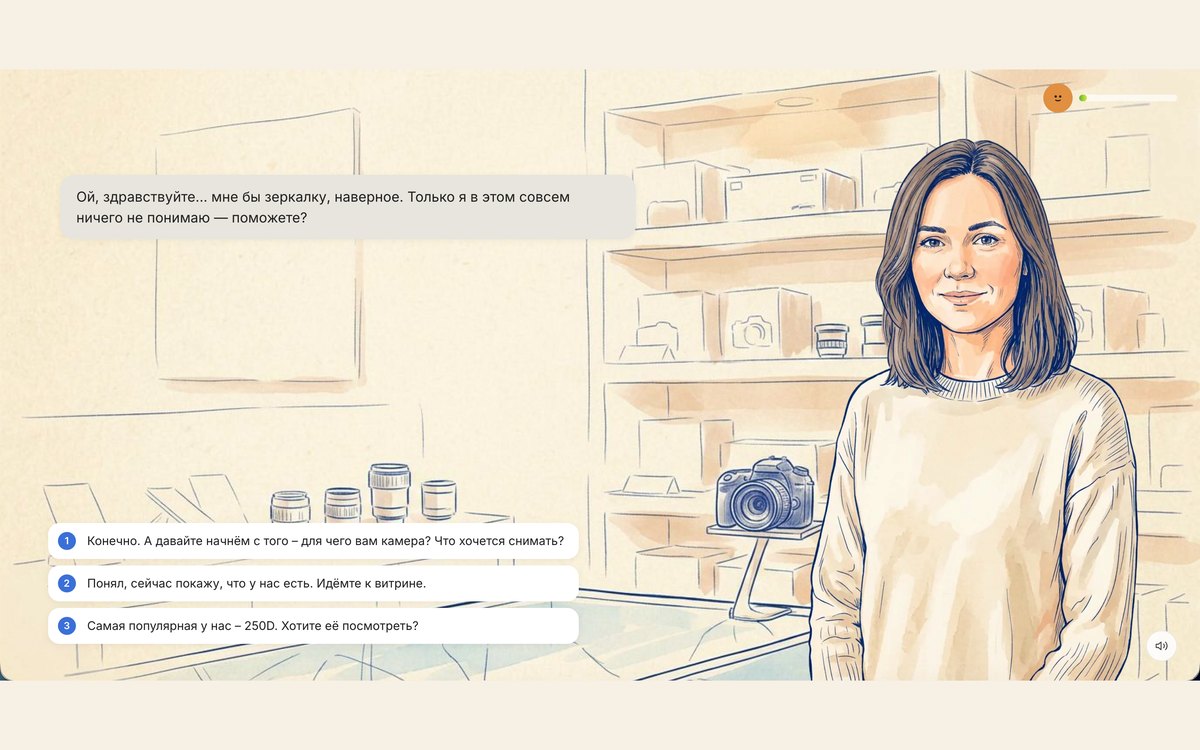
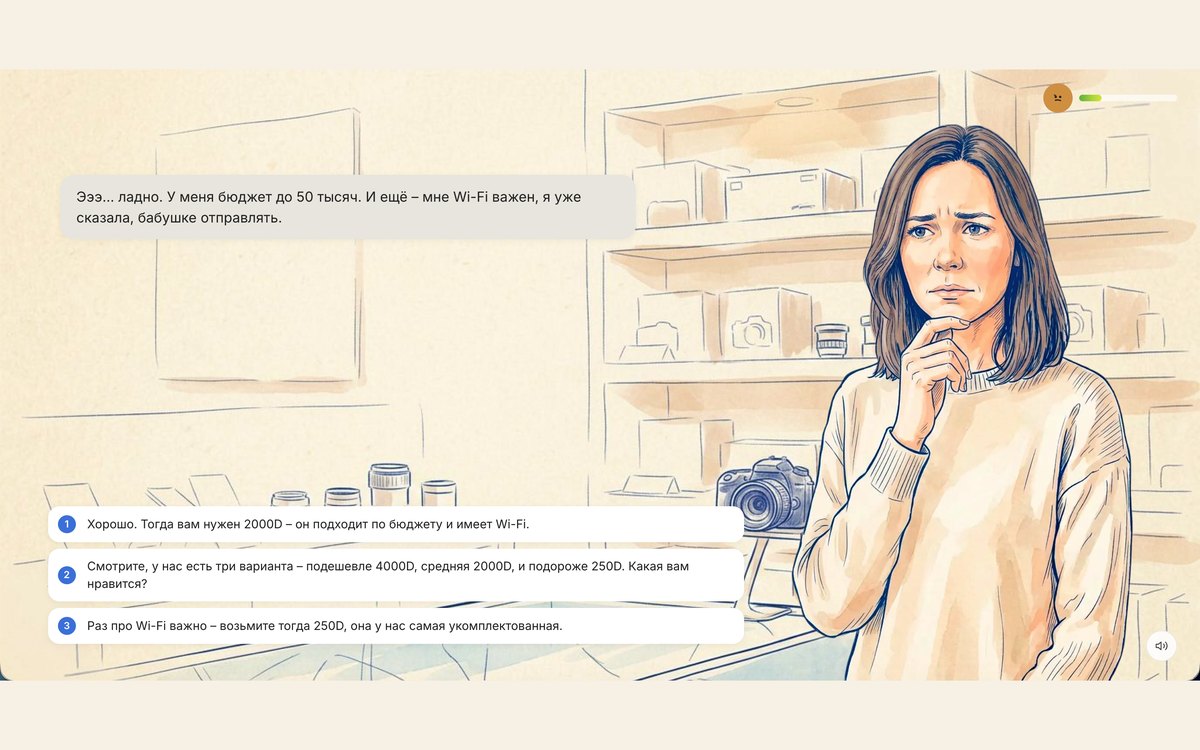
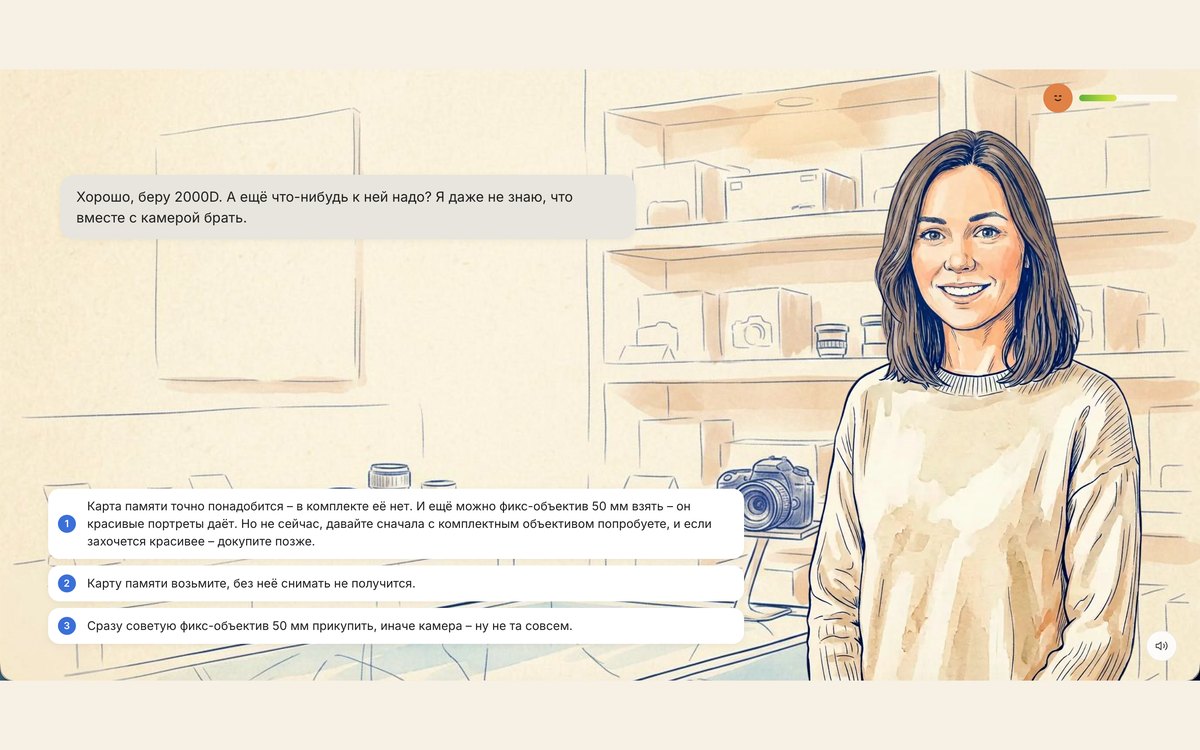
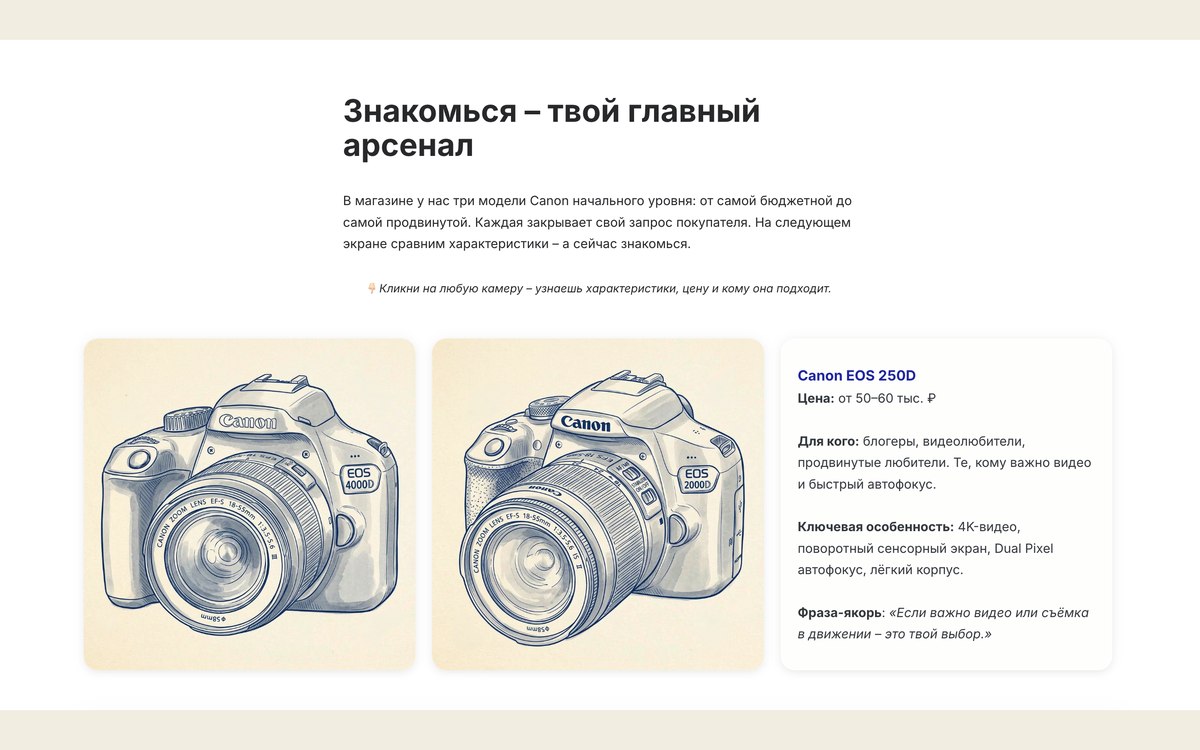
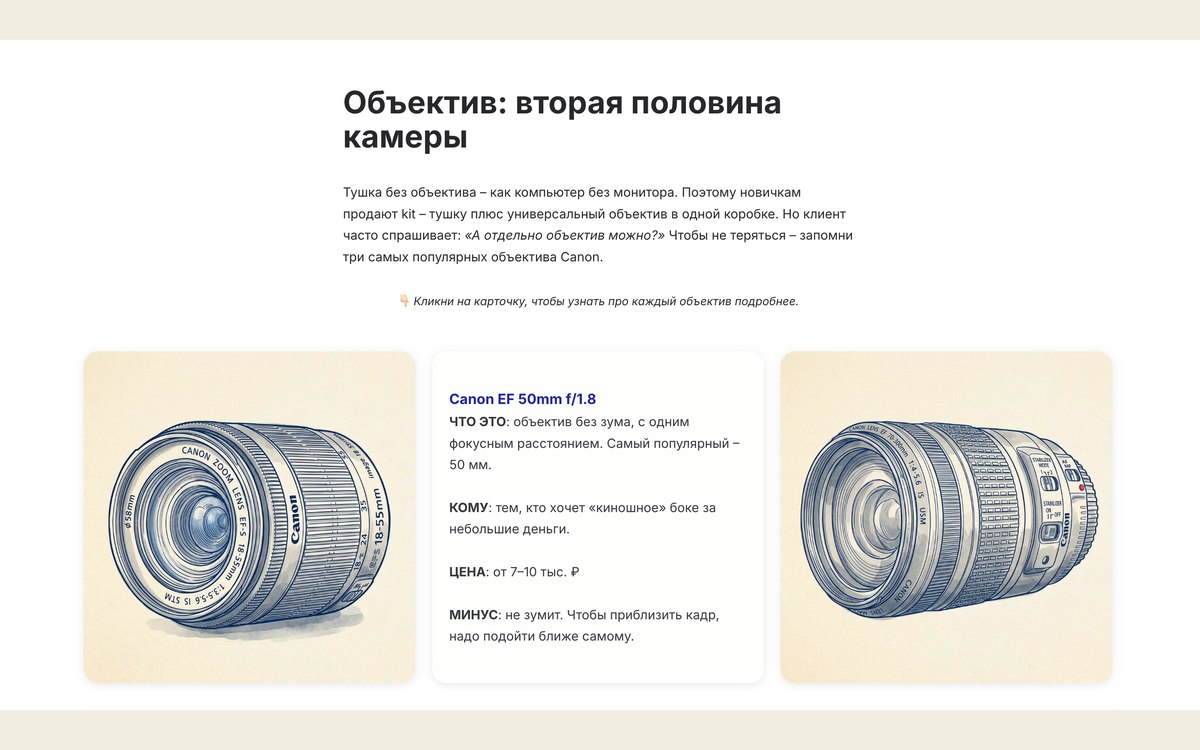
Three entry-level bodies and three lenses each carry a ready-made phrase and an honest limitation next to the specs. The assistant is meant to walk away with a line – and to say it in the final task, the dialogue simulation «A conversation with a customer».
The model behind it
Gagné's nine events, laid out in the order of the module: the shop scene gains attention, the buyer archetypes activate what the assistant already knows from his own shifts, the sensor and model screens present the content, the anchor lines serve as worked examples, and only then comes practice. The order of pages follows those events but is not locked: navigation is free, and the comparison table can be reached from any step. The order of pages stays a default route.
How it was tested
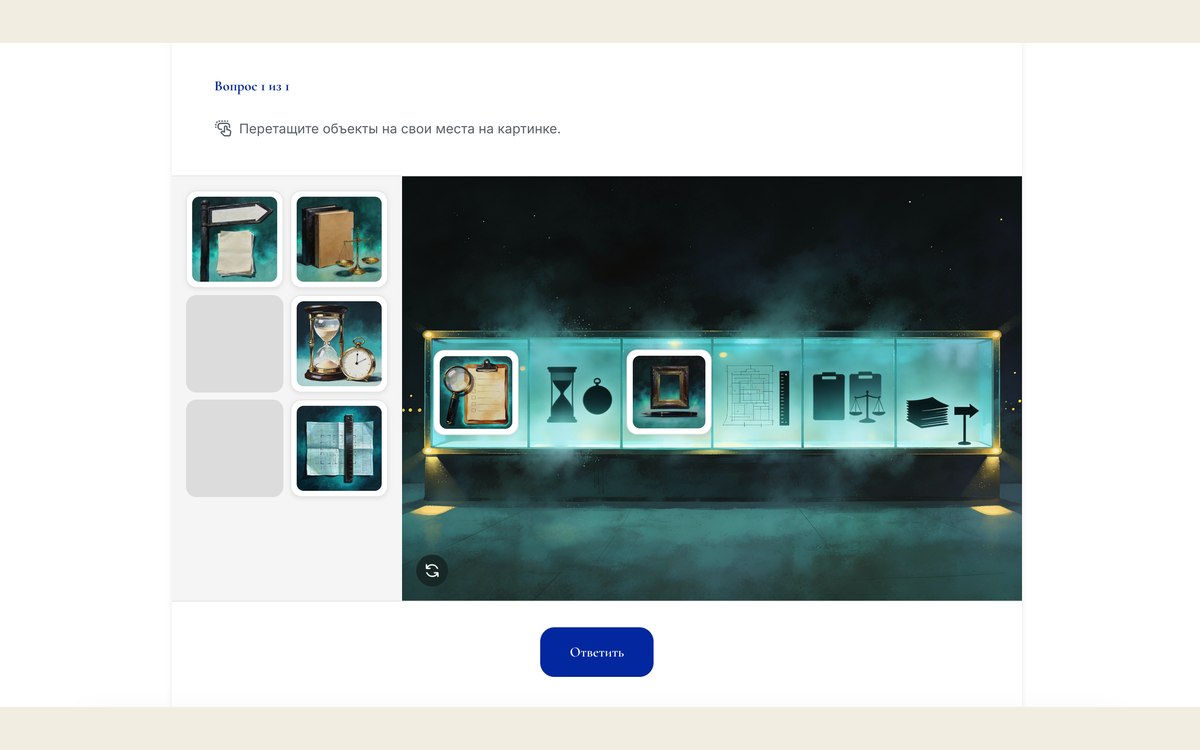
No grade is reported to the LMS: eleven pages, completion by progress. The single scored task is matching a camera to four requests, a 70 % threshold, unlimited attempts, feedback after every answer. It is practice rather than an exam: what matters is that the assistant lands on the right model in the end, not that he lands on it first time. What it measures, though, is recognition rather than transfer: the same four archetypes return and a model has to be picked from three. The question is no longer «what sensor does the 2000D have» but «what do you offer a mother with a forty-thousand budget» – and picking from ready options is still easier than saying it out loud. The transfer is tested on the next page, in the simulation, where the line has to be spoken to a live interlocutor. That is why the course does not end with a test. The link is stitched into the material itself: the archetype card for the young mother says outright that the assistant will meet a customer like her in the final simulation.
Mistakes cluster on the student and the blogger – the two requests where the right answer sits at the ends of the range: the cheapest body for one, the most expensive for the other. For the mother and the traveller the choice converges in the middle, so the habit of offering the popular model does no harm there and fails the answer here. What the task really catches is not missing knowledge but the reflex to sell whatever sells best.
| Request | 4000D | 2000D | 250D |
|---|---|---|---|
| Young mother · up to 40k | – | ✓ | – |
| Aspiring blogger · 50–70k | – | – | ✓ |
| Traveller · not counting pennies | – | ✓ | – |
| Student · up to 30k | ✓ | – | – |